What is the Difference Between Victorian and Edwardian Jewellery?
Ola2025-10-29T16:46:43+00:00Antique jewellery tells the story of an era, not just through its materials and design, but through the values, culture, and craftsmanship of its time.
Two of the most beloved periods among collectors are the Victorian and Edwardian eras. Though only a few decades apart, they differ in almost every way: sentiment, style, and even sparkle.
If you’ve ever wondered how to tell Victorian jewellery from Edwardian, or what makes each period so distinct, here’s your definitive guide.
The Victorian Era (1837–1901): Romance, Mourning, and Sentiment
Victorian jewellery reflects the long and eventful reign of Queen Victoria; a time of industrial innovation, empire, and deep personal sentiment. The Queen’s own life and loves shaped the era’s aesthetic more than any designer could.
Early Victorian (Romantic Period: 1837–1860)
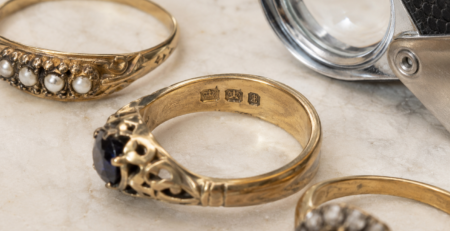
The early years were filled with romantic symbolism and nature-inspired motifs. Think serpent rings, hearts, flowers, and hands — all crafted in warm yellow or rose gold. Gemstones like turquoise, garnet, and coral were popular, often set in intricate, hand-engraved designs.
Jewellery from this period often carries personal meaning: secret messages spelled in gemstones, lockets with woven hair, and pieces given as tokens of love and friendship.
Mid-Victorian (Grand Period: 1860–1885)
Following Prince Albert’s death, mourning became a defining theme. Black enamel, jet, and onyx dominated, and pieces often incorporated memorial motifs such as urns, crosses, or forget-me-nots. The craftsmanship remained exquisite; hand-carved details, fine repoussé work, and delicate engraving were hallmarks of this sombre yet deeply emotive period.
Late Victorian (Aesthetic Period: 1885–1901)
As the Queen’s long mourning eased, jewellery became lighter and more joyful once again. Diamonds rose to prominence, often set in silver-topped gold to enhance their sparkle. Designs featured stars, crescents, bows, and hearts, with a move toward more wearable, everyday elegance.
Late Victorian rings, brooches, and pendants often bridge the gap to the Edwardian style — romantic yet refined, detailed yet airy.
The Edwardian Era (1901–1914): Elegance, Lightness, and Luxury
After the long shadow of the Victorian age, King Edward VII’s reign brought glamour, optimism, and opulence. Jewellery design reached new levels of technical brilliance and delicacy, perfectly reflecting the grace and refinement of the Belle Époque.
Platinum and Diamond Take the Stage
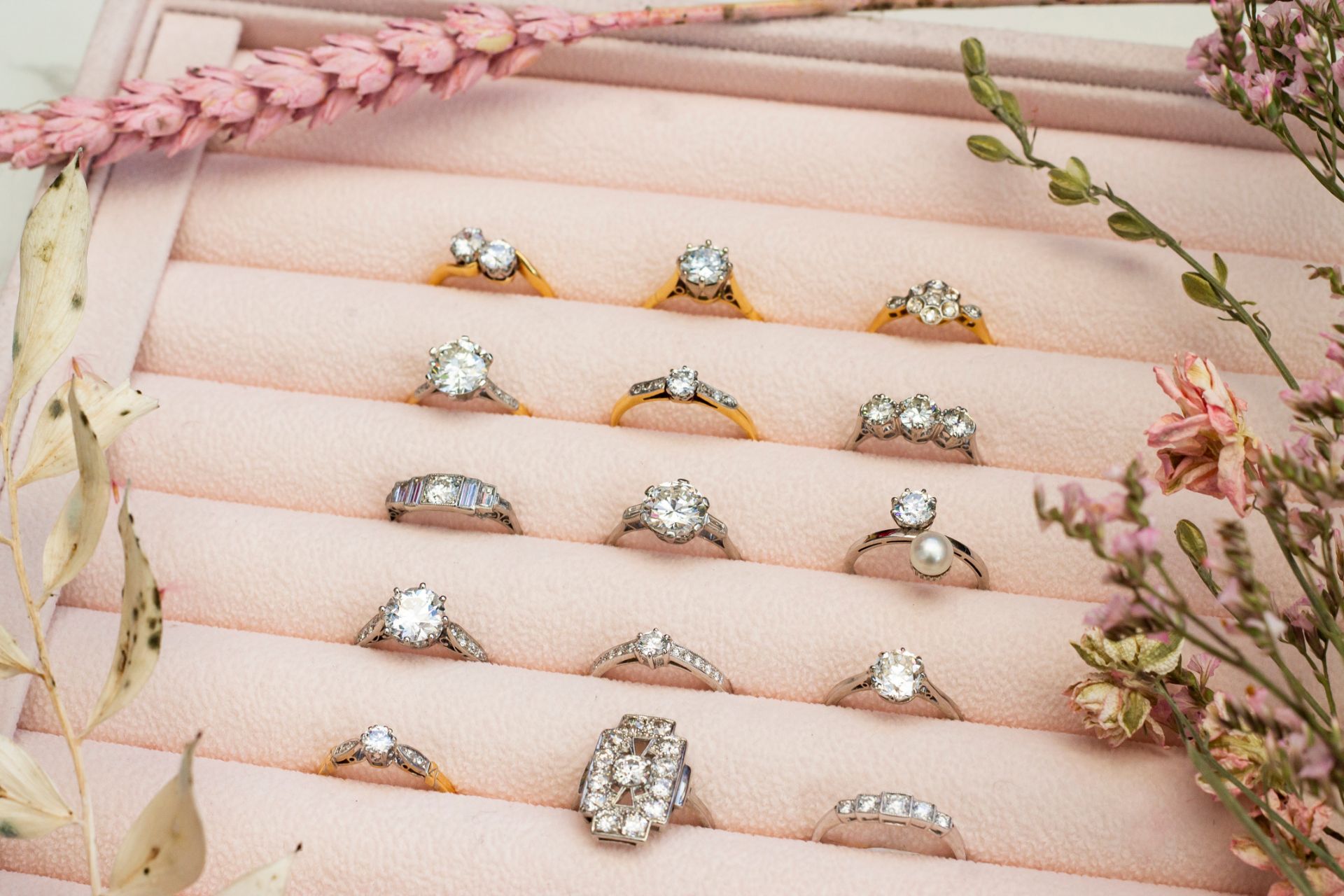
For the first time, platinum became the metal of choice, its strength allowed jewellers to create impossibly fine, lacy settings that were both strong and feather-light.
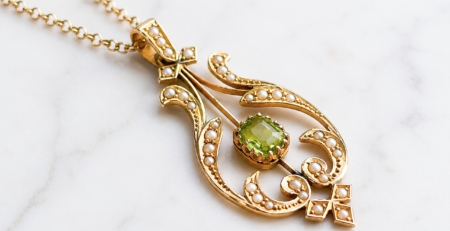
Diamonds and pearls dominated the Edwardian palette, often combined for a monochrome effect that felt both regal and modern. Other popular gemstones included sapphires, aquamarines, and garnets, often accented by delicate milgrain detailing and filigree work.
Feminine, Refined Designs
Edwardian jewellery embraced grace and symmetry. Motifs included bows, garlands, laurel wreaths, and floral swags, all inspired by 18th-century French design and classical revival styles. The overall effect was light, romantic, and sophisticated — a stark contrast to the weighty sentimentality of the Victorian age.
A Short but Brilliant Age
The Edwardian era’s artistry was tragically brief. With the onset of the First World War, platinum was reserved for military use, and fine jewellery production slowed. But in that brief window, some of the most technically and artistically impressive jewellery of all time was created; pieces that still dazzle with their delicacy today.
| Feature | Victorian Jewellery | Edwardian Jewellery |
|---|---|---|
| Time Period | 1837–1901 | 1901–1914 |
| Influence | Queen Victoria’s life and emotions | Belle Époque elegance and high society |
| Metals | Yellow and rose gold, silver | Platinum, white gold |
| Gemstones | Garnet, turquoise, jet, coral; diamonds (later) | Diamonds, pearls, sapphires, aquamarines |
| Themes | Sentiment, mourning, nature, symbolism | Lace-like patterns, bows, garlands, refinement |
| Craftsmanship | Hand-engraved, repoussé, enamel work | Filigree, milgrain, precision platinum work |
| Mood | Emotional, symbolic, nostalgic | Elegant, airy, sophisticated |
Why Collectors Love Them Both
Whether you’re drawn to the emotional storytelling of Victorian jewellery or the graceful sophistication of Edwardian designs, both eras capture something timeless. Victorian pieces whisper of romance, loss, and devotion; Edwardian pieces gleam with light, luxury, and perfection.
Collectors often mix the two; a heavy gold Victorian chain paired with a delicate Edwardian pendant creates a contrast that highlights the beauty of both worlds.