

A Guide to Antique and Vintage Enamel Jewellery

Last Post for Christmas Delivery is 22nd December
Enamel jewellery is one of those areas we are always drawn to. The colour catches your eye first, but once you start looking more closely, there is often far more going on.
We particularly love enamel pieces with an interesting shape or design. Butterfly brooches are a favourite, as are beautifully preserved Victorian pieces and vintage Scandinavian enamel. Condition is important to us too. Finding an old piece with its enamel still bright, complete and largely untouched can make all the difference.
We have also noticed enamel jewellery becoming increasingly popular with our customers over the past couple of years. Most people are not necessarily looking specifically for enamel when they first come across it. They are simply drawn to the colour, shape or design. But we do have customers who have gone on to collect it, particularly Scandinavian pieces.
So what exactly is enamel jewellery, how was it made, and what should you look for when buying an antique or vintage example?
Vitreous enamel is essentially finely ground glass fused to a metal surface using heat. The glass is applied to the metal and fired in a kiln, creating the smooth, richly coloured surface that we recognise as enamel.
It is a technique that has been used for centuries and in many different parts of the world. What makes it particularly interesting in jewellery is the sheer variety of effects that can be achieved.
Some enamel is completely opaque. Other enamel is translucent enough for engraving beneath it to remain visible. In techniques such as plique-à-jour, there may be no solid metal backing at all, allowing light to pass straight through the enamel.
Once you begin recognising the different techniques, periods and makers, enamel jewellery becomes a fascinating area to collect.
You do not need to know every enamelling term to appreciate a piece, but there are several techniques that regularly appear in antique and vintage jewellery.
With champlevé, recesses are created in the surface of the metal and then filled with enamel. The surrounding metal remains visible, effectively forming the borders around the different areas of colour. It is a very old enamelling technique and was widely used in decorative metalwork long before the Victorian era.
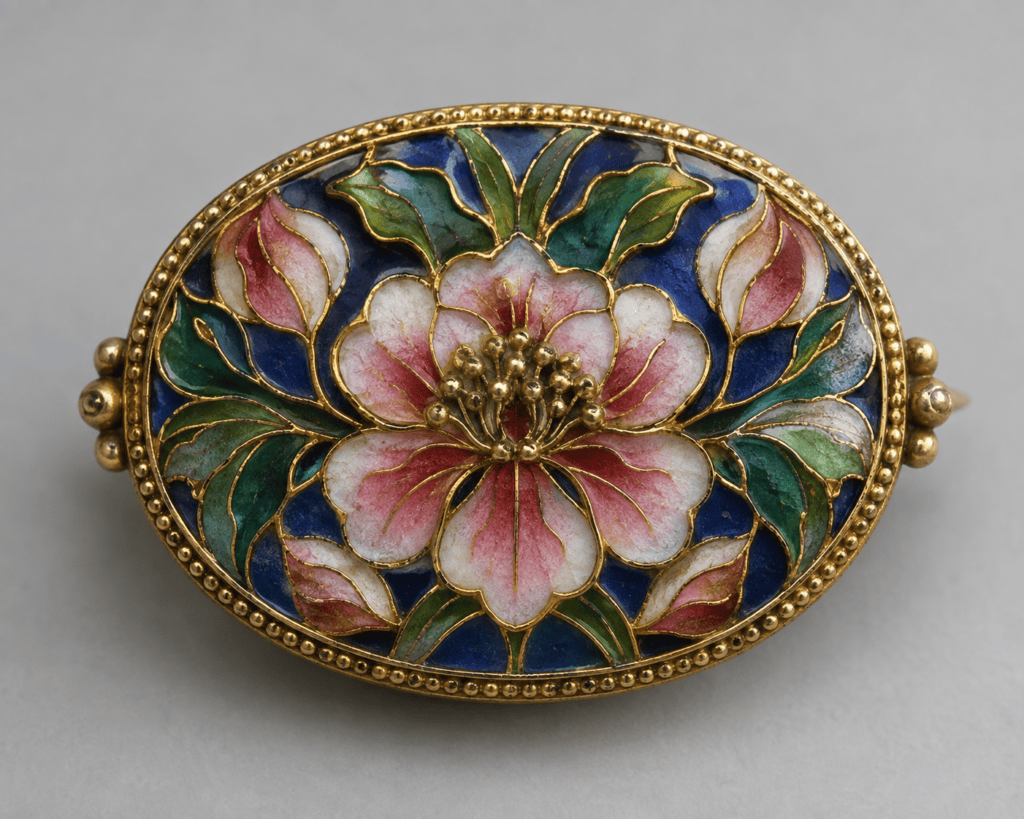
Cloisonné uses fine metal wires or strips to create small compartments on the surface of the piece. These individual sections are then filled with enamel.
If you look closely, the fine metal outlines separating the different colours are often clearly visible and form an important part of the design itself.
Basse-taille uses translucent enamel over a patterned or worked metal surface. The decoration underneath remains visible through the enamel, creating depth and movement as the piece catches the light.
It is one of the reasons some antique enamel can look so different depending on the angle from which you view it.
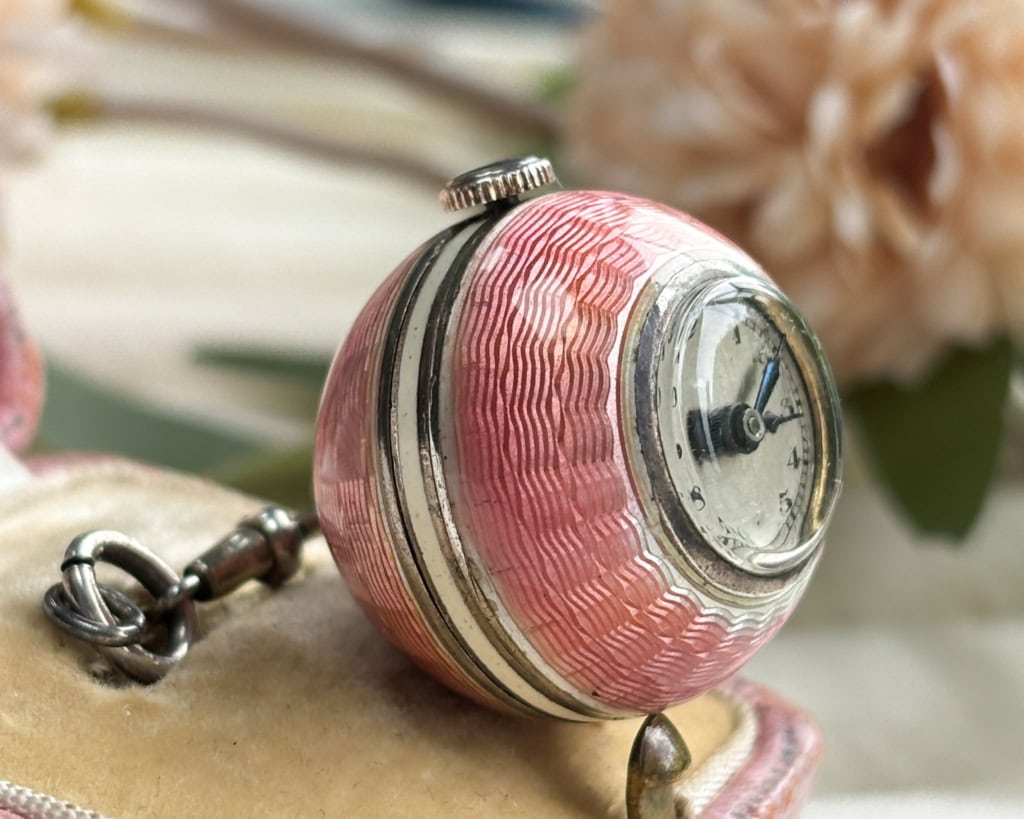
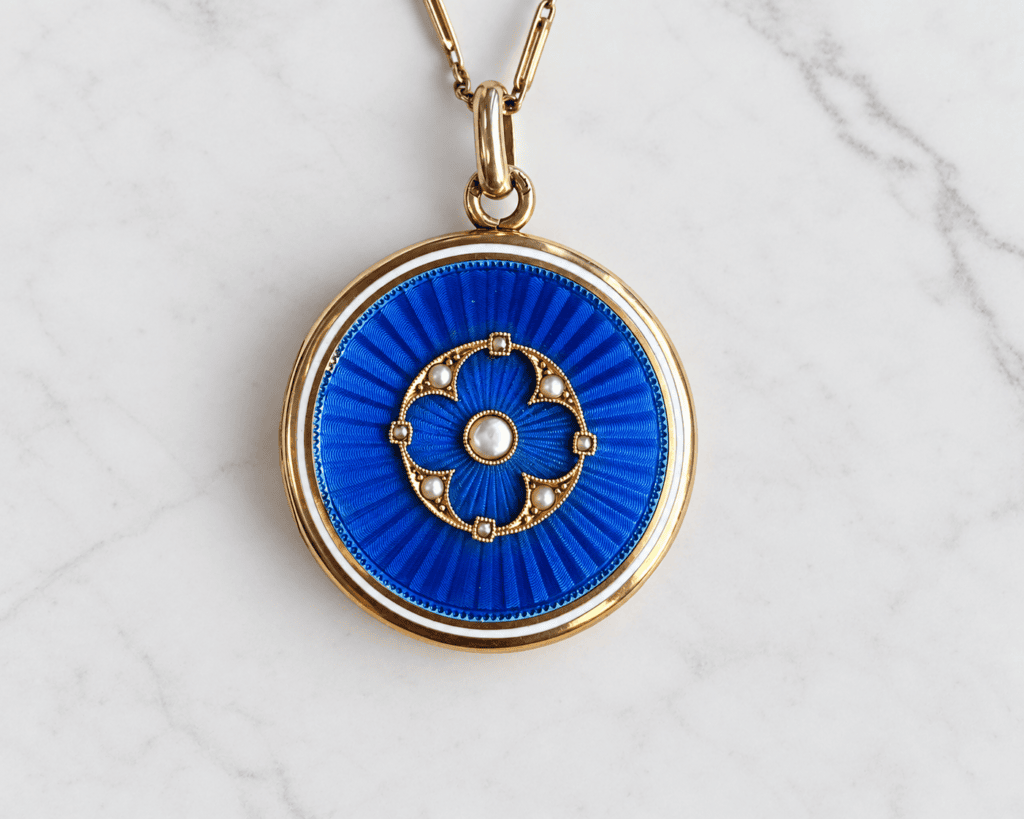
Guilloché combines finely engine-turned metal with translucent enamel.
Before the enamel is applied, intricate repeating patterns such as waves, rays or geometric designs are mechanically engraved into the surface. Once covered with translucent enamel, those patterns remain visible beneath the colour.
The technique became particularly popular for luxury objects and jewellery and reached an extraordinary level of refinement around the turn of the 20th century.
Plique-à-jour is one of the most beautiful enamelling techniques and also one of the most technically demanding.
The enamel sits within open cells without a solid backing, allowing light to pass through it. The effect is similar to miniature stained glass.
It was particularly suited to the natural forms of late 19th and early 20th-century jewellery, where translucent enamel could be used to create delicate leaves, flowers, dragonfly wings and other organic forms.
Victorian jewellery gives us some wonderful examples of enamel.
Black enamel is perhaps the most recognisable, particularly in mourning and sentimental jewellery, but Victorian enamel was certainly not restricted to black.
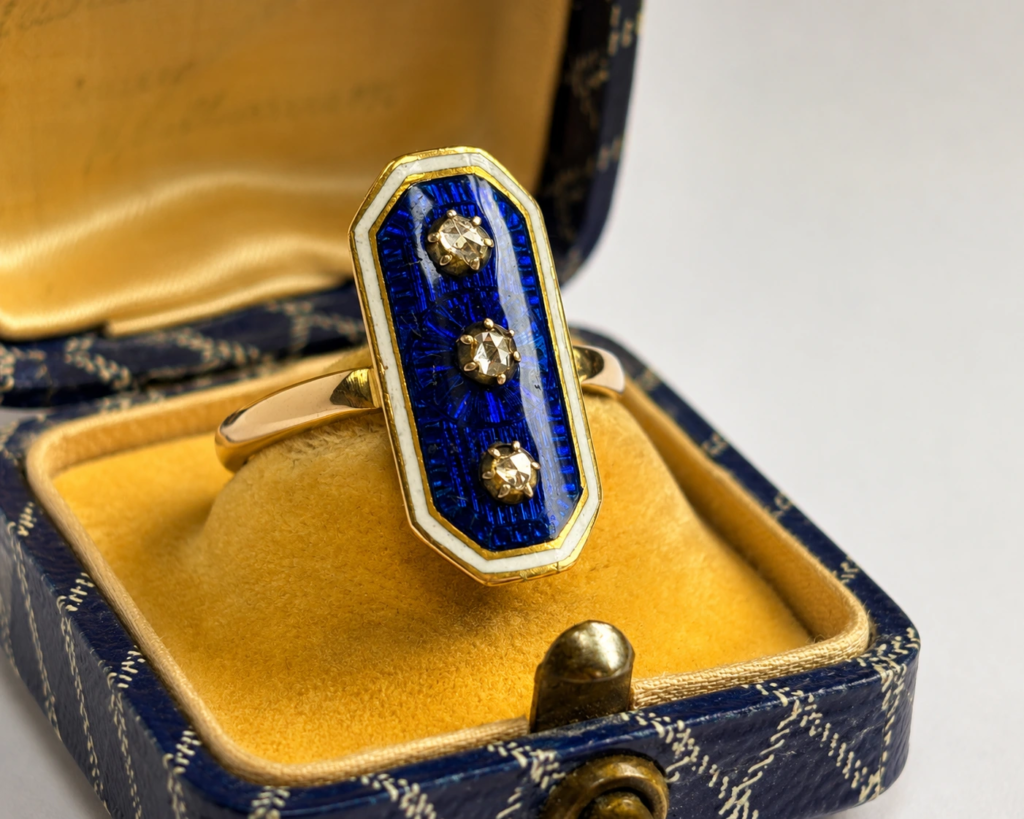
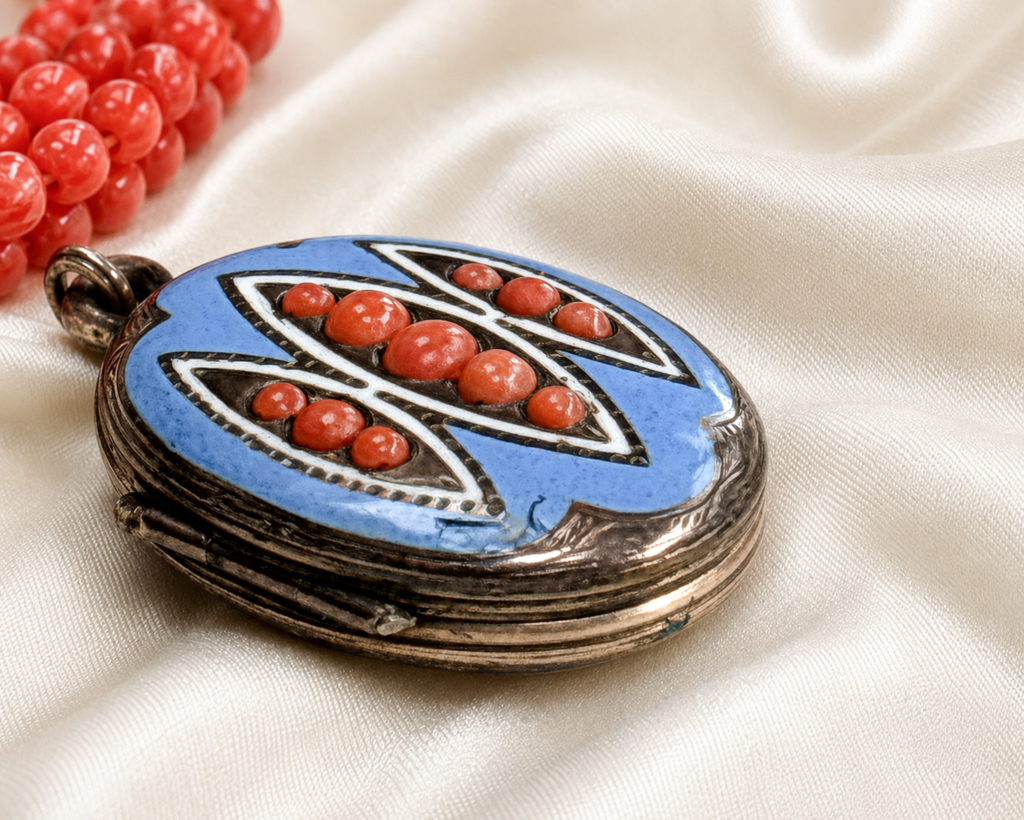
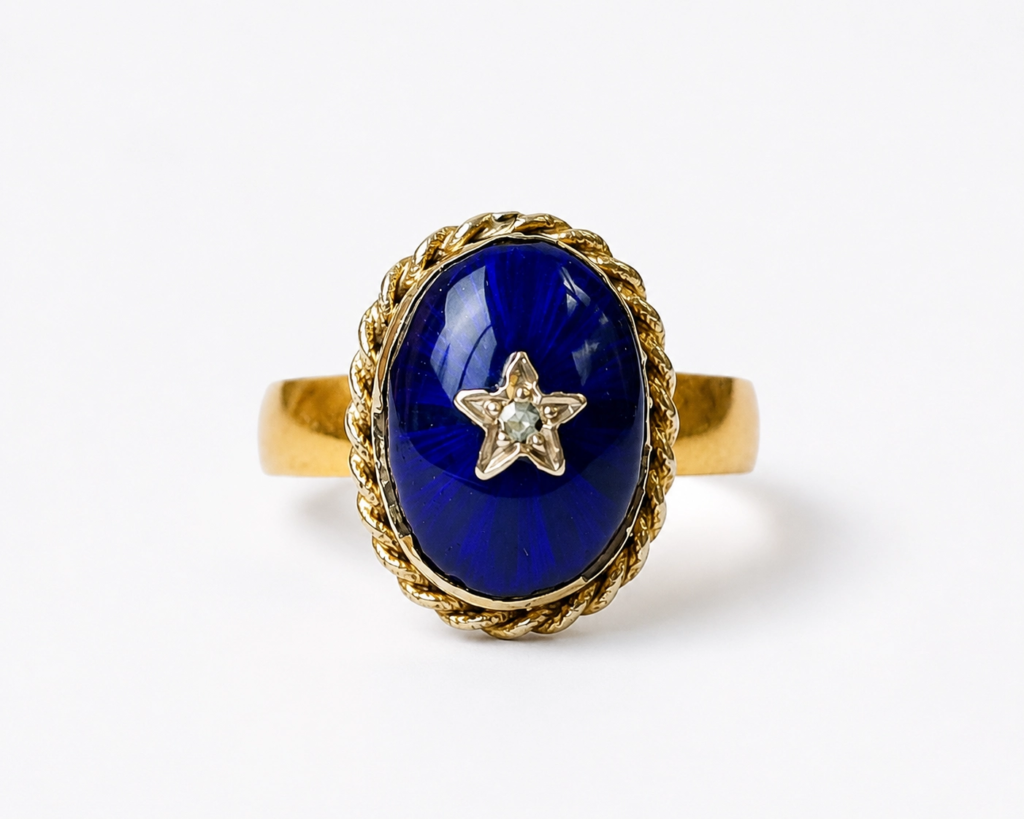
One of the colours we are particularly drawn to is the deep cobalt blue that appears on some Victorian pieces. Set against yellow gold, it can be incredibly striking.
As the 19th century progressed, British jewellery also became increasingly experimental in its use of colour, historic influences and handcraft. Towards the end of the century, enamelling enjoyed a significant revival in Britain as part of the Arts and Crafts movement.
When we are trying to date a piece, the first thing we tend to respond to is its overall design. After that, marks become extremely important. Hallmarks, maker’s marks and assay marks can turn an initial impression into something much more definite.
Art Nouveau and enamel were naturally suited to one another.
Flowing lines, plants, insects, flowers and organic shapes could all be brought to life with colour in a way that gemstones alone could not achieve.
Plique-à-jour was particularly effective because it allowed areas of a jewel to appear almost translucent. Art Nouveau jewellers used these techniques to create jewellery that looked less rigid and more like something taken directly from nature.
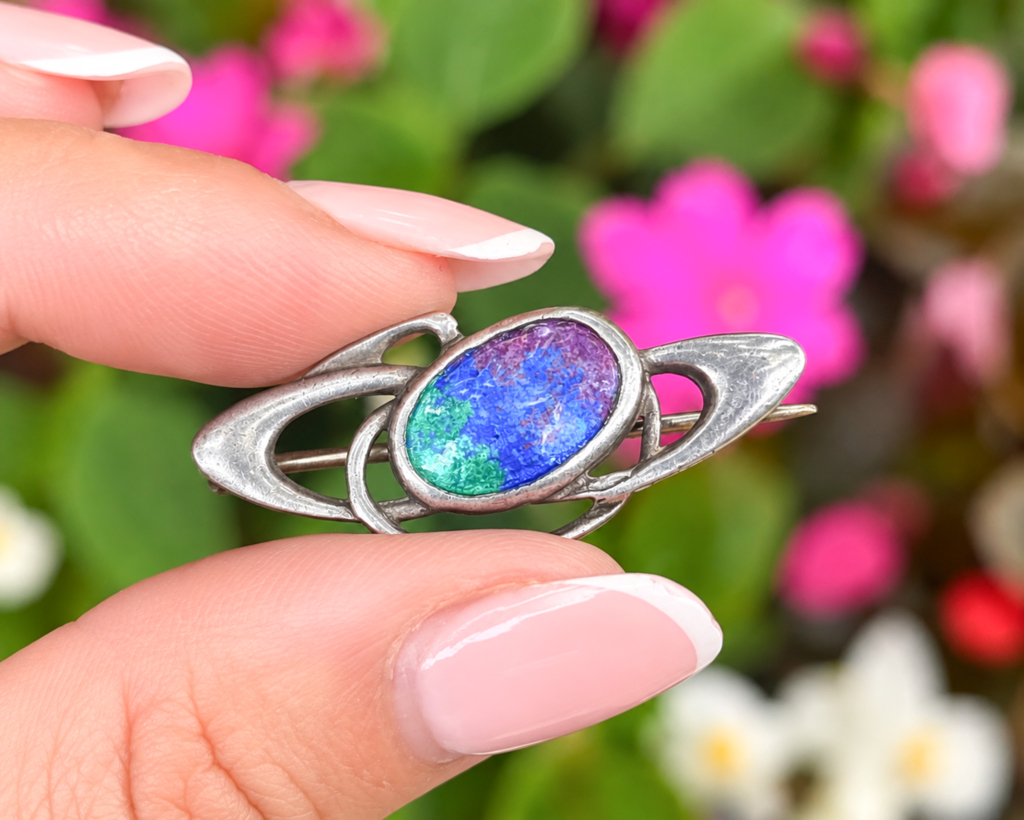
Charles Horner is one of the British names we are always pleased to see on an enamel piece.
The Horner business was based in Halifax, Yorkshire, and produced a wide variety of silver and gold jewellery. .
Horner enamel jewellery often has exactly the qualities we enjoy: distinctive shapes, flowing lines and strong use of colour.
Finding a recognisable maker’s mark can completely change how you look at a piece. It is no longer simply a pretty enamel brooch. Suddenly you can begin connecting it to a workshop, a designer and a particular moment in jewellery history.
Murrle Bennett is another name that immediately makes us look more closely.
Murrle, Bennett & Co worked between London and the German jewellery centre of Pforzheim. beautiful design with the kind of craftsmanship that makes Arts and Crafts and Art Nouveau jewellery so appealing to collectors today.
By the 1920s and 1930s, the design language had changed dramatically.
The curves and naturalism of Art Nouveau gave way to stronger geometry, cleaner lines and more graphic combinations of colour.
This is another period of enamel jewellery we particularly love. Some Art Deco enamels have beautiful shell-like or almost pearlescent colour combinations, while others use much stronger contrasts.
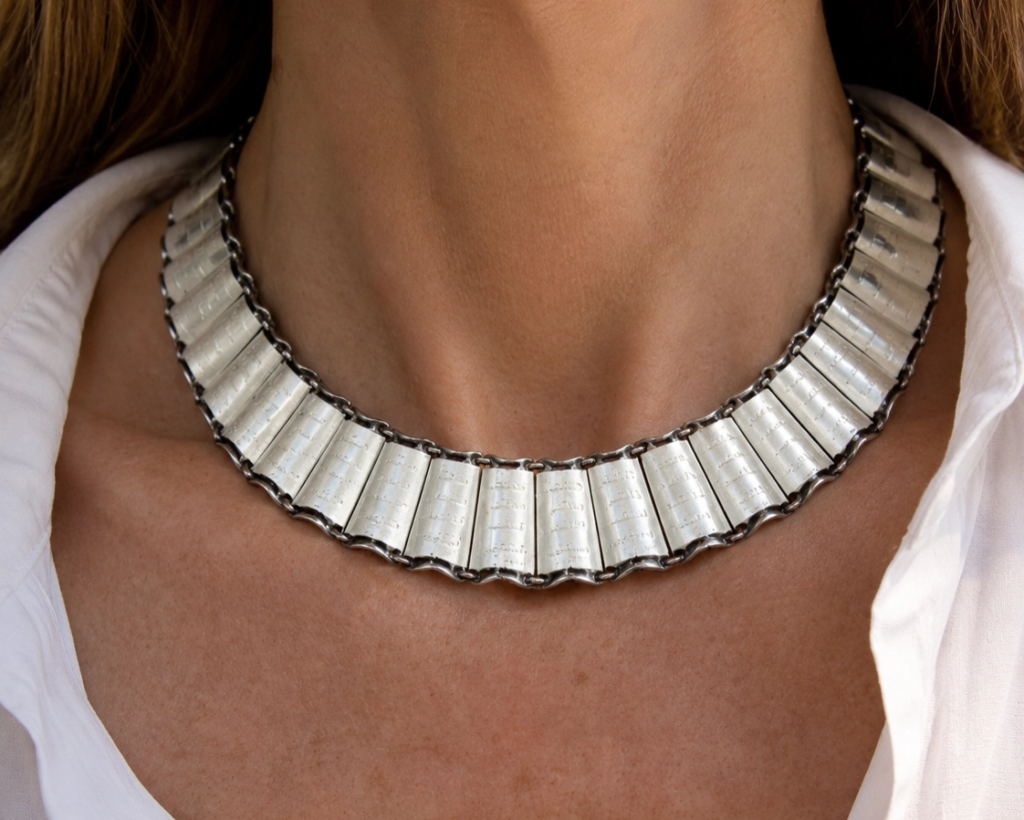
One enamel piece that has always stood out to us is a beautiful Art Deco choker necklace we have handled. What makes it particularly special is not just the design, but the condition. The enamel has survived remarkably intact.
For us, that matters enormously.
Condition is one of the first things we look at when buying enamel jewellery.
Chips, cracks and, particularly, areas of missing enamel can have a major effect on both the appearance and desirability of a piece.
We inspect the edges carefully because these areas can be particularly vulnerable. We also look for obvious losses, cracks and signs of previous damage or repair.
Some gentle wear is completely understandable in jewellery that may be 100 years old or more, but there is a difference between normal age-related wear and enamel that is in genuinely poor condition.
Even with a recognised designer or maker, we would normally pass on a piece if the enamel were badly damaged. A famous name does not automatically outweigh poor condition.
On the other hand, finding an antique piece with bright, intact enamel can be incredibly satisfying.
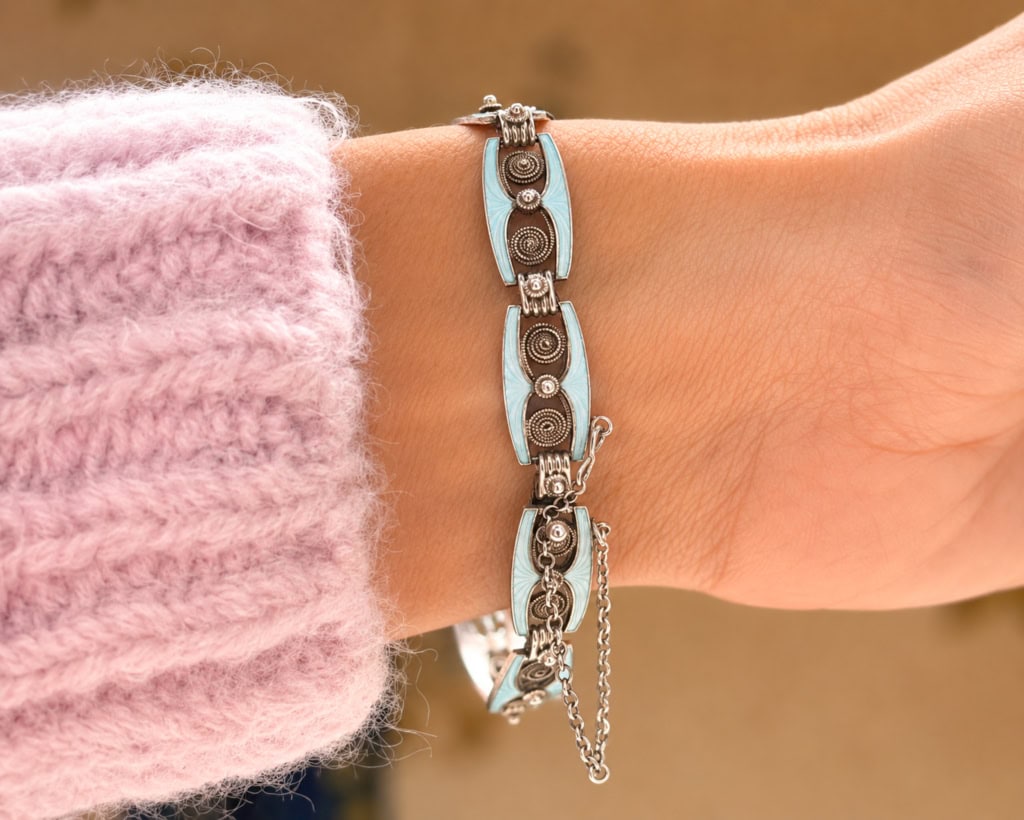
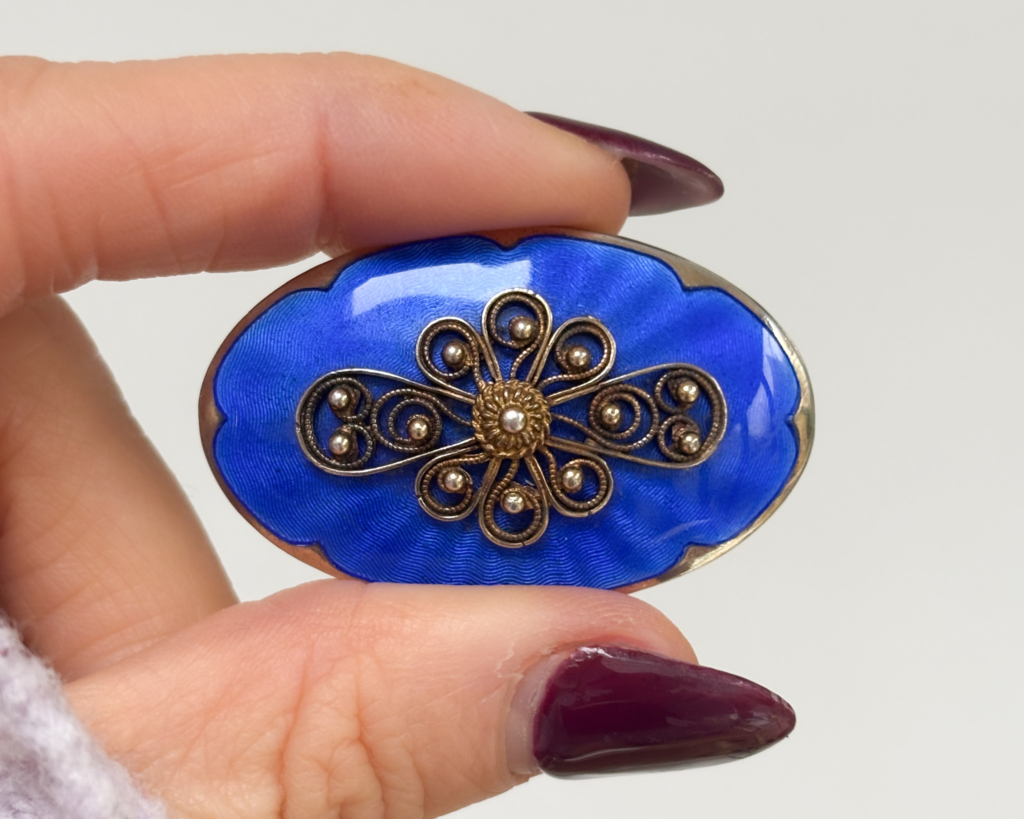
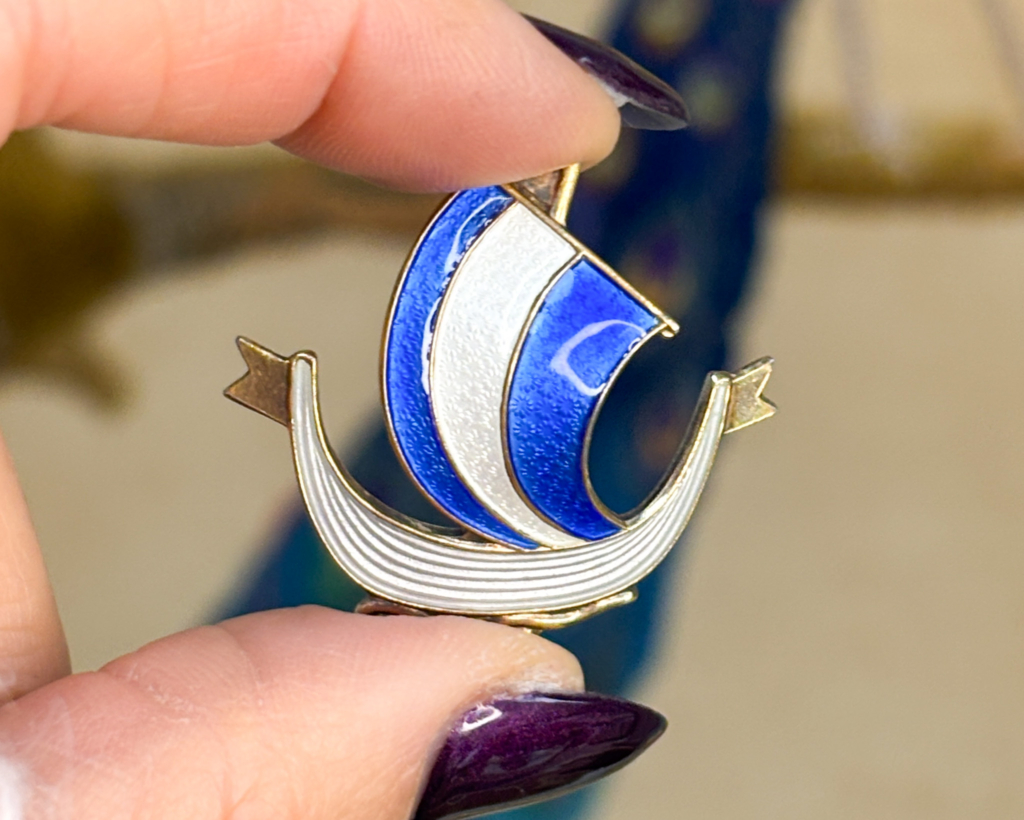
Vintage Scandinavian enamel has become one of our favourite areas to buy.
What appeals to us most is the combination of shape, colour, craftsmanship and attention to detail. Even quite simple designs can be beautifully considered.
We also think Scandinavian enamel makes a particularly interesting area to collect because once you start looking, you begin recognising individual makers, marks and design styles.
David-Andersen is probably one of the names most familiar to collectors of Norwegian enamel jewellery.
David Andersen established his goldsmithing business in Christiania, now Oslo, in 1876. In 1888 the firm established its own enamel workshop, where craftsmen specialised in different enamelling techniques. By 1900, David-Andersen had gained international recognition and received two gold medals at the Paris Exposition.
David-Andersen jewellery continued to evolve through the 20th century and vintage pieces can range from decorative florals to much cleaner Scandinavian modernist forms.
It is exactly the sort of jewellery where turning the piece over can be just as interesting as looking at the front.
In 2026, the Norsk Folkemuseum marked David-Andersen’s 150th anniversary with a major exhibition dedicated to enamel craftsmanship, exploring its importance not only in jewellery but within Norwegian design and social history more broadly.
Marius Hammer is another Norwegian maker whose mark immediately makes us pay attention.
Hammer established his own workshop in Bergen in 1871. From around 1880 he became known for both jewellery inspired by traditional Norwegian designs and technically accomplished plique-à-jour enamel work.
His enamel pieces can be extraordinarily intricate, and good examples demonstrate just how sophisticated Scandinavian enamelling had become by the end of the 19th century.
Ivar T. Holth is another name we look for when buying Norwegian vintage enamel.
As with David-Andersen and Marius Hammer, part of the appeal lies in being able to connect a beautifully made piece with a recognisable workshop or maker.
Once you start handling Scandinavian enamel regularly, those marks become part of the pleasure of collecting it.
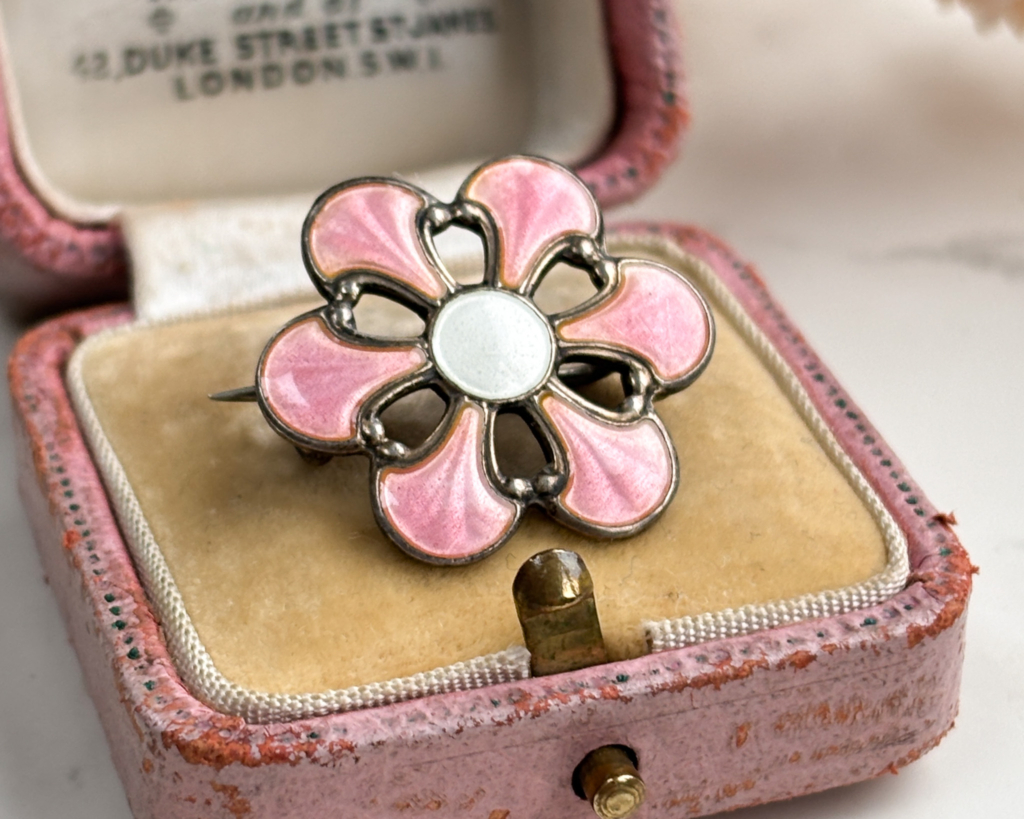
If there is one form of enamel jewellery we find particularly difficult to resist, it is the butterfly brooch.
The shape lends itself perfectly to enamel. Wings provide space for colour, pattern and symmetry, and vintage examples can range from surprisingly realistic to wonderfully stylised.
It is often the bright enamel that catches our attention first.
Butterfly brooches also illustrate something we see with customers all the time. Someone may not walk into the shop looking for an enamel brooch specifically. They simply see the colour and shape and fall in love with the piece.
That immediate visual appeal is one of enamel jewellery’s biggest strengths.
Over the past two years, we have noticed a definite increase in interest in enamel jewellery amongst our customers.
One reason may be the rising price of gold.
As gold jewellery has become more expensive, we have seen customers becoming more open to beautifully made silver jewellery, particularly signed or designer pieces where the craftsmanship is exceptional.
Enamel fits into this perfectly.
A silver enamel brooch or necklace can involve an extraordinary amount of work. The colours can be vivid, the designs intricate and the attention to detail exceptional, without the piece necessarily carrying the same price as an equivalent piece made predominantly from gold.
We also think people are increasingly drawn to jewellery that feels individual rather than mass-produced.
Enamel certainly provides that.
There is rarely one single feature that dates a piece conclusively.
We tend to start with the overall design. Shape, style, colour and construction often give the first indication of a period.
Then we look for marks.
Hallmarks, assay marks and especially maker’s marks can provide enormously useful information. Recognising names such as Charles Horner, David-Andersen, Marius Hammer, Ivar T. Holth or Murrle Bennett can immediately give us another line of research.
We also look at:
No single clue should really be considered in isolation.
Traditional enamelling techniques are still practised today, so simply recognising cloisonné, guilloché or plique-à-jour does not automatically make something antique.
Our first piece of advice would actually be very simple: buy something you love.
A recognised designer or rare technique is interesting, but you still have to want to wear or own the piece.
After that, look carefully at condition.
Pay particular attention to missing enamel and obvious chips. Check edges and raised areas and, if possible, examine the piece under magnification.
Look at the back too.
Hallmarks and maker’s marks are often where the story becomes much more interesting.
For someone who wants to build a collection rather than simply buy one piece, Scandinavian enamel is a particularly enjoyable place to start. There are numerous makers to discover, and the combination of strong shapes, vivid colour and excellent craftsmanship gives the field enormous variety.
Enamel can survive beautifully for well over a century, but it needs sensible care.
Our advice to customers is to treat it more gently than an ordinary solid metal piece.
Avoid knocking enamel jewellery against hard surfaces and keep perfume and other chemicals away from it. We would also avoid ultrasonic cleaners and prolonged soaking, particularly with antique pieces where you may not know the full history of previous repairs.
Gentle cleaning and careful storage are usually preferable.
Butterfly wings, fine edges and projecting sections of a design deserve particular care because these can be vulnerable to knocks.
After handling antique and vintage jewellery for many years, enamel still has the ability to surprise us.
We might find a Victorian piece in the richest cobalt blue, a brightly coloured butterfly brooch, an Art Deco necklace with beautiful shell-like tones or a Scandinavian piece where the craftsmanship only becomes apparent once you start looking closely.
Some customers simply fall for the colour.
Others begin noticing the marks and end up becoming collectors.
That is part of what makes enamel so interesting. There is always another technique, designer or maker to discover.
At Aladdin’s Cave Jewellery, we have specialised in antique and vintage jewellery for over 45 years, and enamel remains one of the categories we particularly enjoy buying.
You can explore our latest antique and vintage enamel jewellery collection online, or visit us in the historic Queens Arcade in Leeds to see our latest pieces in person.


Jessica Spencer is part of the third generation at Aladdin's Cave Jewellery in Leeds. Her guides are based on the real antique jewellery handled in the shop and decades of family experience.
If you've ever picked up an old ring, brooch or pendant and wondered, "How old is this?", you're not alone.... read more

Finding your perfect ring size can feel confusing, but it doesn’t need to be. Whether you’re choosing an engagement ring,... read more

There’s something extraordinary about gifting jewellery at Christmas; a moment frozen in gold, a sparkle that carries sentiment far beyond... read more

Engagement rings have carried the promise of love for centuries, from Roman iron bands to the dazzling diamond solitaires we... read more

Ever spotted tiny stamped symbols inside an antique or vintage ring and wondered what they meant? You're not alone. Hallmarks... read more
If you have ever looked inside an antique ring and found no hallmark, you are not alone.It is one of... read more

Antique jewellery holds centuries of beauty, craftsmanship, and soul, but it’s also surrounded by myths that can make new buyers... read more

Whitby Jet is a gemstone that has held a special place in the world of antique jewellery, captivating jewellery enthusiasts... read more
This guide to antique pocket watches explores their value, history, and collectability—ideal for those wondering whether an old family timepiece... read more

Eternity rings are a timeless and symbolic jewellery choice; often gifted for anniversaries, milestones, or simply as a meaningful token... read more
Sign Up To Our Newsletter For 10% OFF Your First Purchase