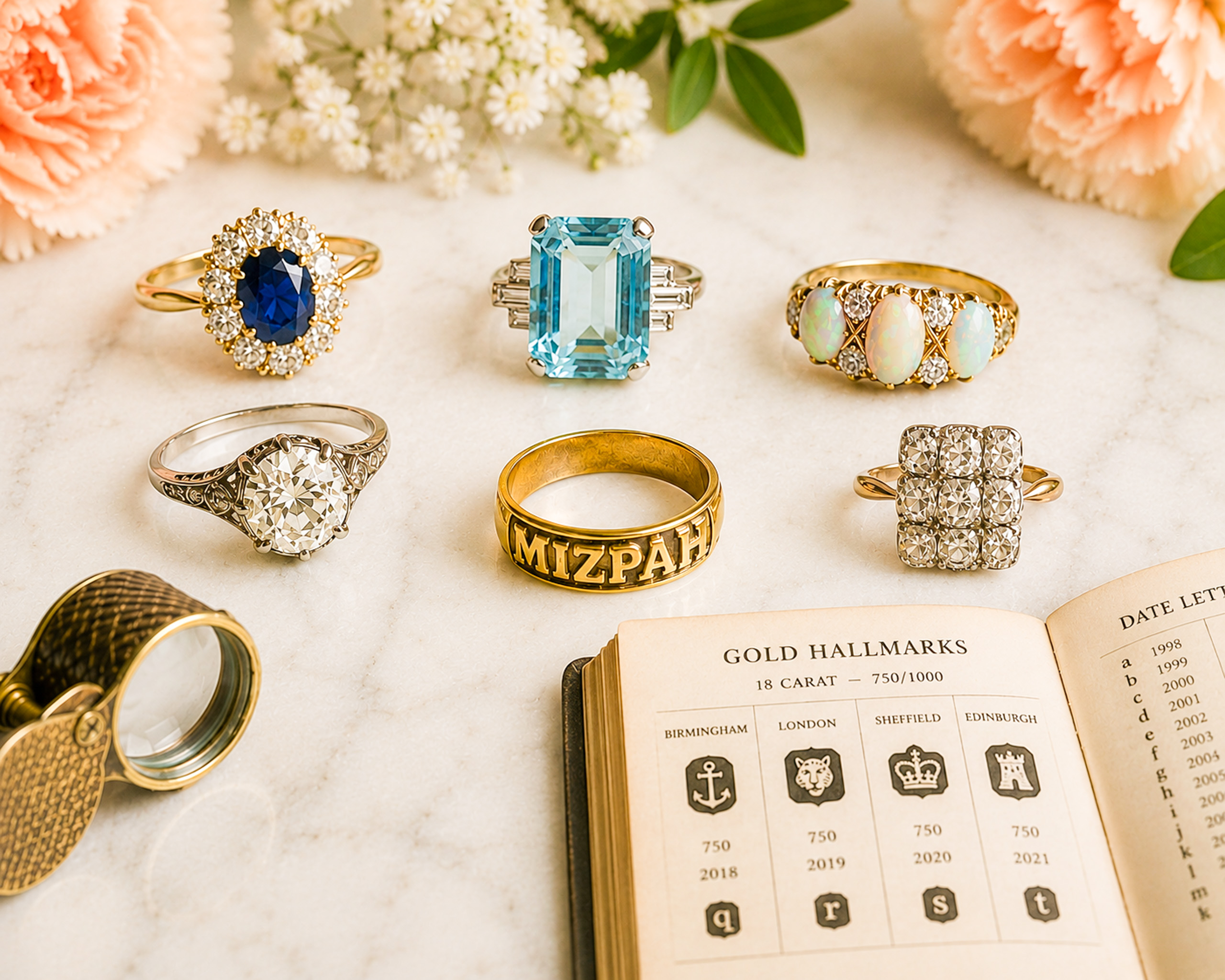
Is My Jewellery Antique? Clues to Look For
Jessica Spencer2026-08-21T07:47:25+00:00If you’ve ever wondered whether a piece of jewellery is genuinely antique, you’re not alone. It’s one of the questions we’re asked most often in our shop.
The truth is that identifying antique jewellery isn’t about finding one magic clue. It usually involves looking at several different details together, including the style, craftsmanship, gemstones, settings, hallmarks and signs of age.
After decades of handling antique and vintage jewellery at Aladdin’s Cave Jewellery in Leeds, we’ve learned that every piece tells a story. Sometimes that story is obvious. Other times, it takes a closer look.
This guide explains the main things we look for when assessing antique jewellery and will help you understand what to look for yourself.
What is considered antique jewellery?
In general, jewellery is considered antique if it is at least 100 years old. Pieces made after this period are usually described as vintage, although there is no universally agreed definition of exactly when vintage begins.
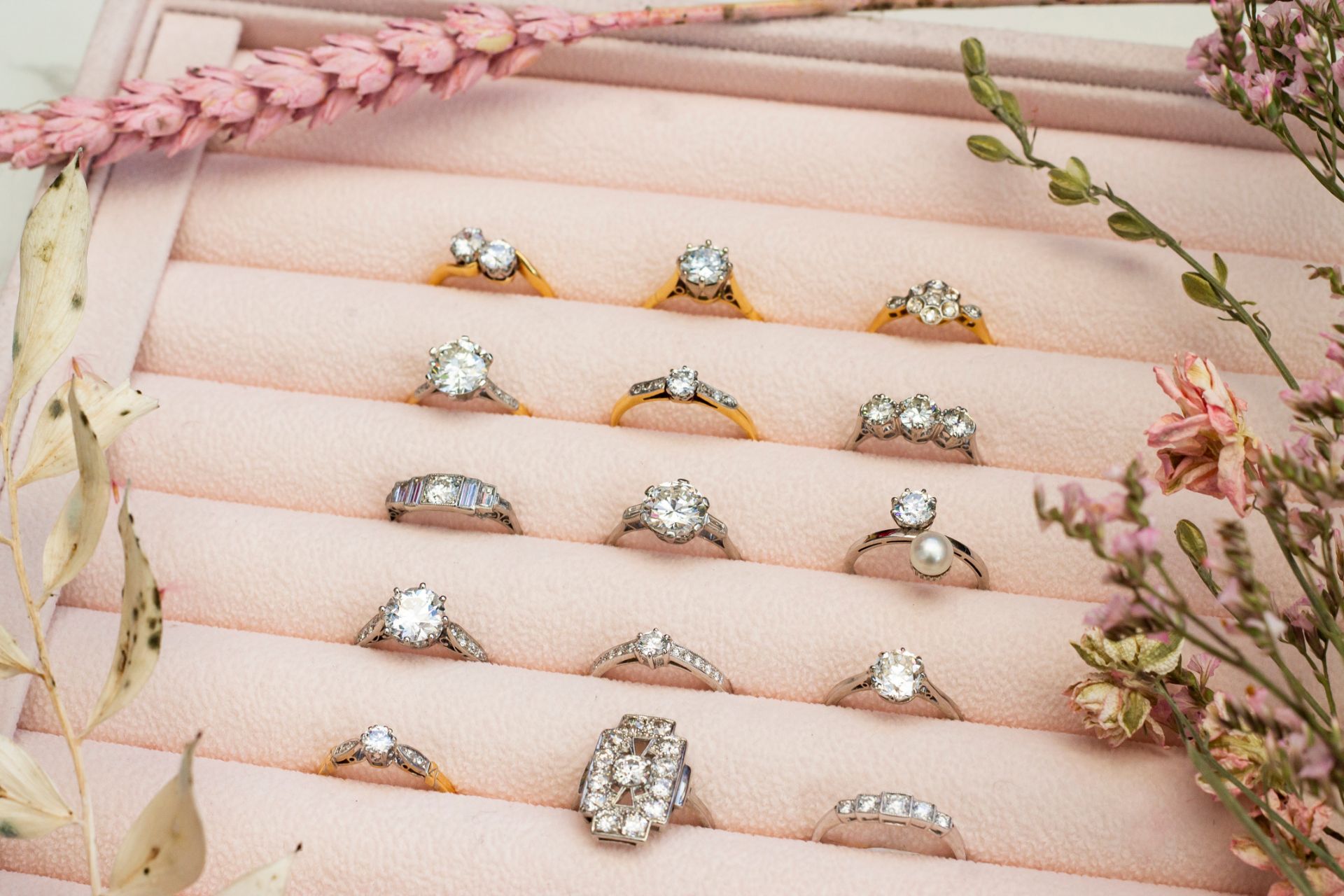
Many of the most popular pieces we sell today come from the Victorian, Edwardian and Art Deco periods, each with their own distinctive characteristics.
Start with the hallmarks
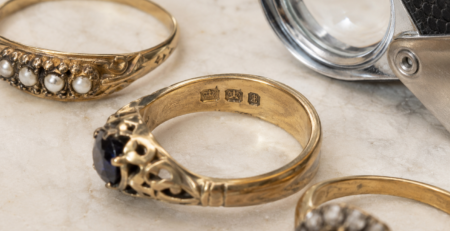
If your jewellery has British hallmarks, these are often the best place to begin.
Hallmarks can tell you:
- the precious metal
- where it was assayed
- when it was hallmarked
- sometimes the maker
However, hallmarks don’t tell the whole story.
Many antique rings have been resized over the years, which can remove part or all of the original hallmark. Some pieces were made before hallmarking became compulsory in its current form, while others were produced abroad using different marking systems.
Equally, the absence of a hallmark does not automatically mean a piece is not gold.
If you’re unsure, it’s always worth having the piece professionally examined rather than relying on hallmarks alone.
Look at the design
Jewellery styles changed dramatically over time, and recognising these differences is one of the most useful ways to estimate age.
Victorian jewellery often features symbolic motifs such as hearts, snakes, stars and flowers, with rich yellow gold and colourful gemstones.
Edwardian jewellery is generally lighter and more delicate, with intricate lace-like metalwork and plenty of diamonds and pearls.
Art Deco jewellery embraces strong geometry, clean lines and striking contrasts, often combining diamonds with sapphires, emeralds, onyx or rubies.
While style provides valuable clues, remember that later jewellery sometimes copied earlier designs, so style alone should never be used as proof of age.

Examine the craftsmanship
Older jewellery was made very differently from much of today’s mass-produced jewellery.
Hand-finished pieces often display tiny irregularities that are completely normal and can even add to their charm.
Look for:
- hand-cut settings
- individually shaped claws
- finely pierced galleries
- engraved details
- evidence of hand finishing rather than machine production
These subtle characteristics often reveal far more than a quick glance at the front of the piece.
Study the gemstones
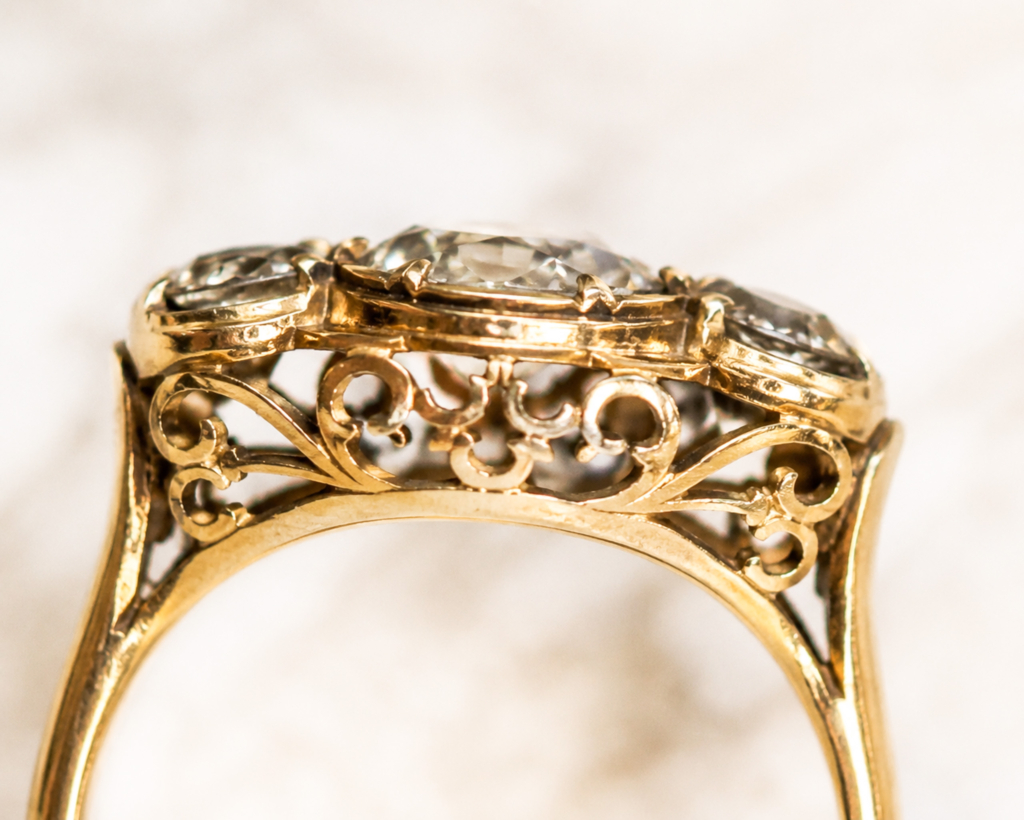
The way gemstones are cut can offer valuable clues about age.
Many antique diamond rings contain:
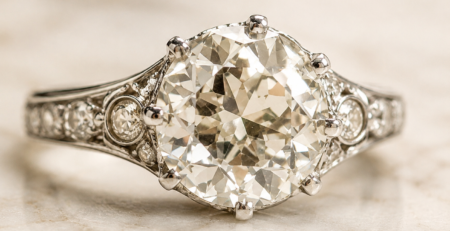
- Old Mine Cut diamonds
- Old European Cut diamonds
- Rose Cut diamonds
These historic cuts were designed long before modern brilliant-cut diamonds became standard. They often display broader flashes of light rather than the sharp sparkle associated with modern cutting techniques.
Coloured gemstones also differ from many modern examples. Antique sapphires, rubies and emeralds were often cut to preserve weight rather than maximise brilliance, giving them their own distinctive appearance.
Look at the setting
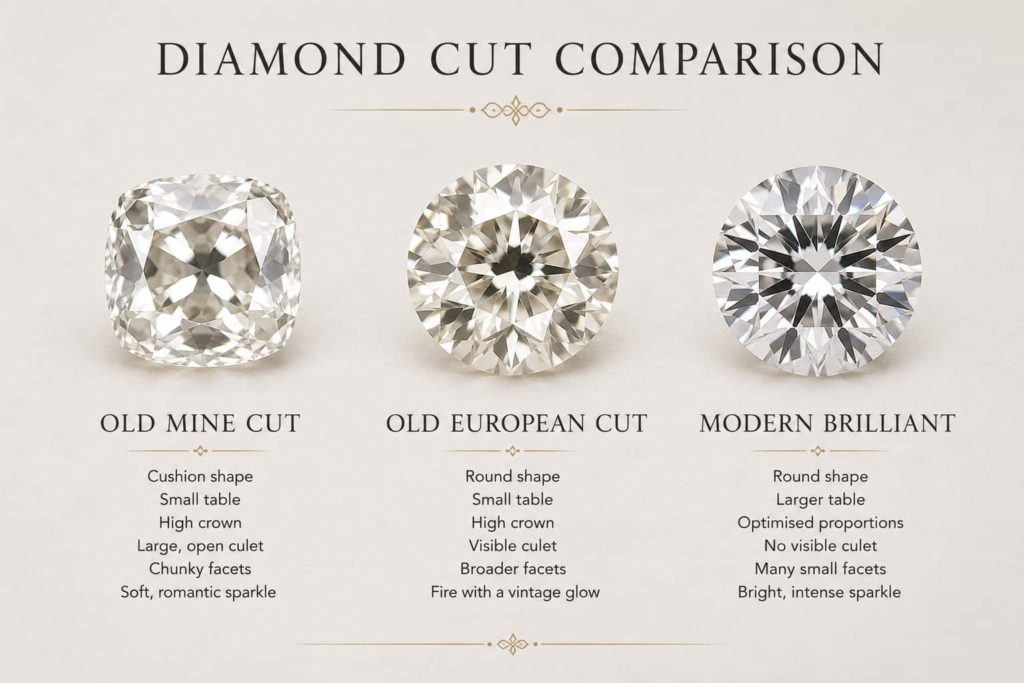
Jewellery settings evolved over time.
Older pieces frequently feature:
- closed-back settings
- cut-down settings
- buttercup settings
- hand-formed claws
- silver-topped gold construction
- early platinum work
The construction underneath the jewellery can often reveal just as much as the view from the front.
Consider the wear
One of the biggest misconceptions is that antique jewellery should look perfect.
In reality, genuine antique pieces often show signs of a long and well-loved life.
This might include:
- softened engraving
- gentle wear to the band
- small surface scratches
- slight thinning from decades of wear
- repairs carried out by previous generations
These signs don’t necessarily reduce the beauty or desirability of a piece. In many cases, they simply reflect its history.
Don't rely on online tests
There are countless videos suggesting that you can identify antique jewellery using magnets, vinegar or other household methods.
These tests are unreliable and, in some cases, can even damage the jewellery.
Similarly, identifying age from photographs alone is rarely possible. Professional jewellers will usually want to inspect construction, metal, settings and wear in person before giving a confident opinion.
Can You Identify Antique Jewellery Without Hallmarks?
Yes.
While hallmarks are helpful, experienced jewellers assess many other factors, including:
- design
- craftsmanship
- gemstone cuts
- construction
- wear patterns
- metal testing
- historical manufacturing techniques
These details are considered together rather than individually.
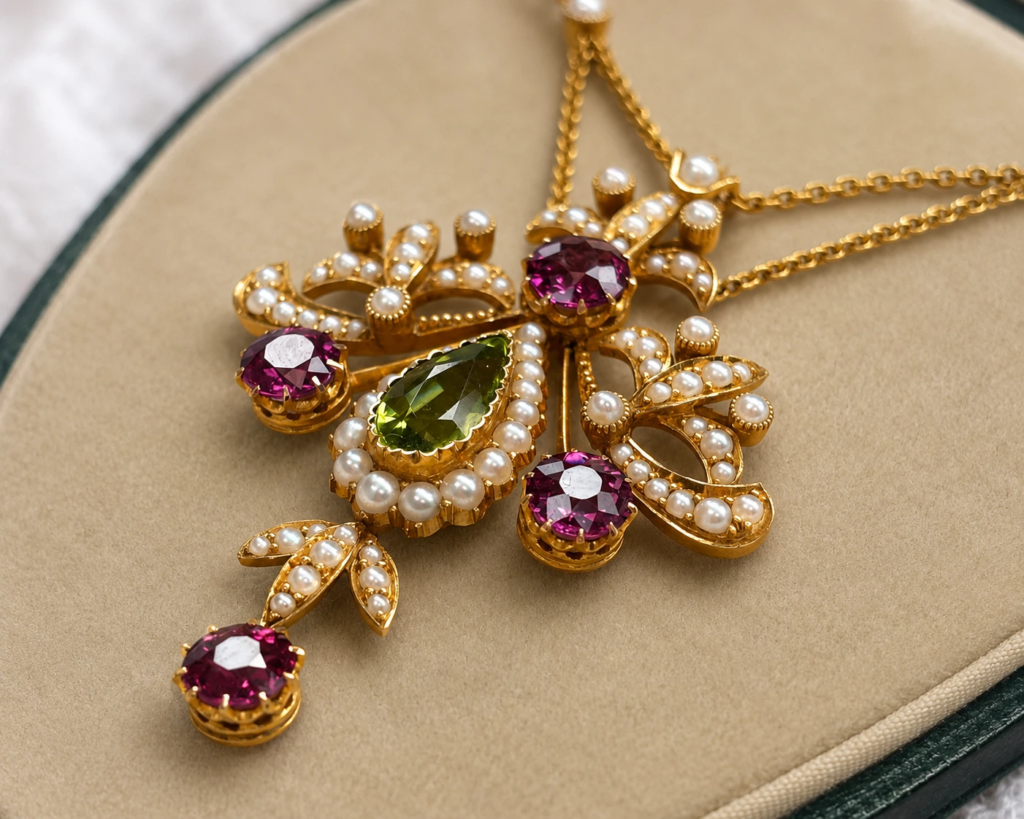
Spot the clues
🔍 No visible hallmark
🔍 Purple, green and white gemstones – colours traditionally associated with Suffragette jewellery
🔍 Delicate seed pearl detailing, popular in the early 20th century
🔍 Fine hand-finished construction and closed-back settings
Although this pendant has no visible hallmarks, it displays several characteristics that help us understand its age and style. The combination of purple, green and white gemstones is widely associated with Suffragette jewellery, while the delicate seed pearls and handcrafted construction are typical of the Edwardian period. Experienced antique jewellers consider these visual clues alongside the craftsmanship, construction and materials when assessing a piece.
Common myths
“If it isn’t hallmarked, it isn’t gold.”
Not true. Many genuine antique gold pieces are unhallmarked for perfectly legitimate reasons.
“If it’s old, it must be valuable.”
Age is only one factor. Condition, craftsmanship, rarity, gemstones, desirability and provenance all influence value.
“Old jewellery is too delicate to wear.”
Many antique rings have already been worn daily for over a century and continue to be enjoyed today. The key is understanding each individual piece and wearing it appropriately.
When should you seek professional advice
If you have inherited jewellery, are considering buying an antique piece or simply want to know more about something you own, a professional assessment can provide much more reliable information than online identification alone.
An experienced antique jeweller will examine the construction, gemstones, metal, hallmarks and craftsmanship together before offering an opinion.
Final thoughts
Identifying antique jewellery is rarely about one single clue. Instead, it is the combination of design, craftsmanship, materials and history that builds a picture of a piece’s age and authenticity.
Every antique jewel has lived a life before it reaches its next owner. Learning to recognise the details behind that history is part of what makes collecting and wearing antique jewellery so rewarding.
Whether you’re researching a family heirloom or searching for your next antique treasure, understanding what to look for will help you buy with greater confidence and appreciate the remarkable craftsmanship that has allowed these pieces to survive for generations.
Looking for Antique Jewellery?
If you’re ready to start your own collection, browse our carefully selected range of antique and vintage jewellery, or visit us in our Leeds shop where we’re always happy to help.


Jessica Spencer
Antique Jewellery Specialist
Jessica Spencer is part of the third generation at Aladdin's Cave Jewellery in Leeds. Her guides are based on the real antique jewellery handled in the shop and decades of family experience.