Art Deco Jewellery: The Story Behind the Style
Last Post for Christmas Delivery is 22nd December
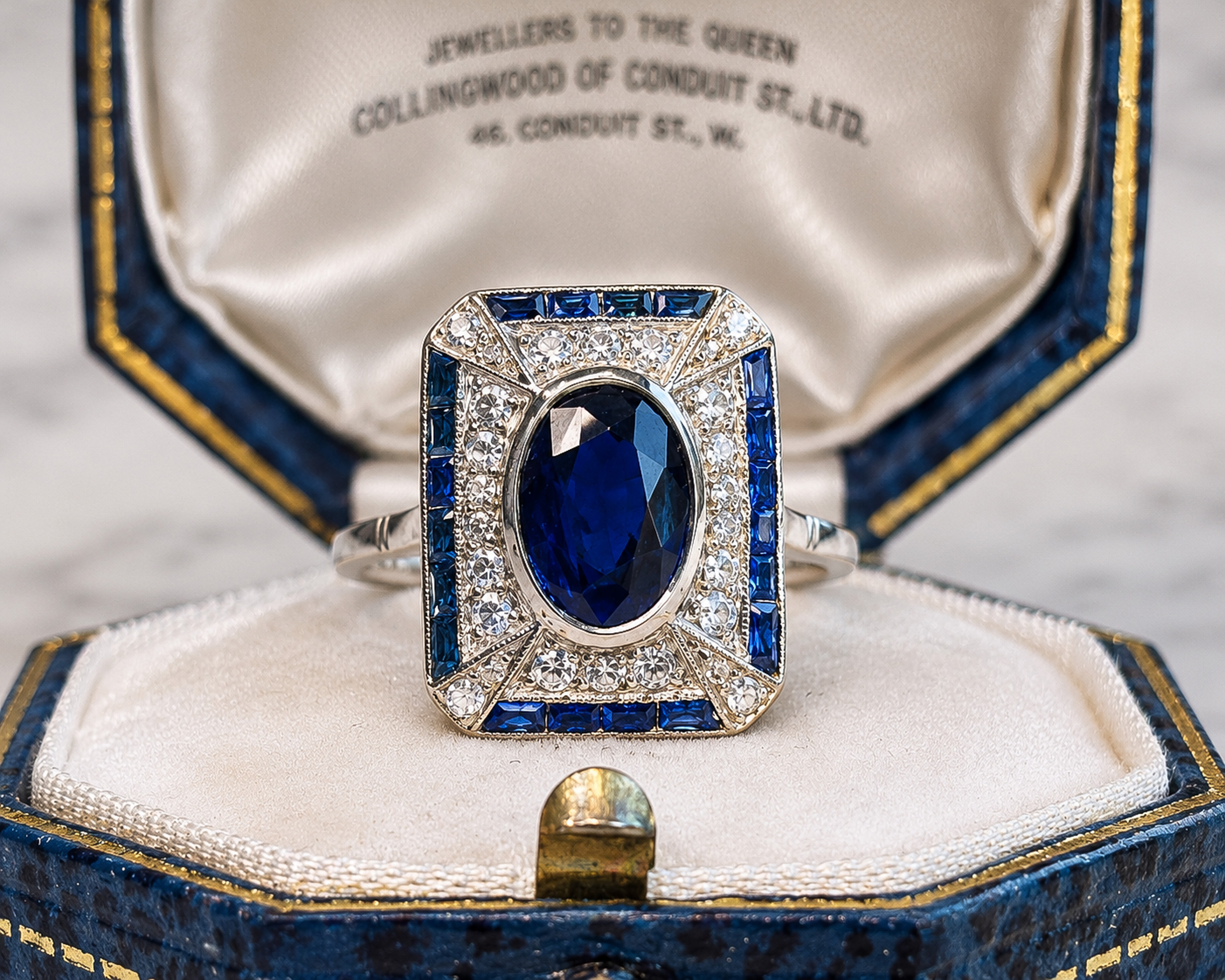
There’s a reason I’m drawn to Art Deco jewellery. I love the symmetry, the contrast and the colour. Above all, I love the way a piece of jewellery can look like architecture, with stepped shoulders, precise outlines and gemstones arranged into a carefully balanced design.
I tend to prefer clean lines and geometric patterns generally, so it makes sense that these are the pieces that catch my eye in the shop.
Customers often feel the same way. Some specifically seek out those familiar Art Deco characteristics. Others recognise the name but know relatively little about the period. They simply like what they see.
And although the jewellery belongs to another age, much of its design still feels remarkably current. You can see similar ideas in modern jewellery: strong silhouettes, contrasting stones and a clear sense of proportion.
Understanding how those designs developed makes the pieces more interesting still. Art Deco didn’t arrive fully formed in 1920, and jewellery didn’t suddenly lose every trace of Edwardian influence. Its history is one of overlapping styles, changing tastes and a world negotiating what it meant to be modern.
We often describe jewellery periods as if they followed one another in tidy succession. In practice, jewellers continued using familiar techniques, customers retained their preferences, and new ideas appeared alongside established designs.
The jewellery itself can show that overlap particularly well.
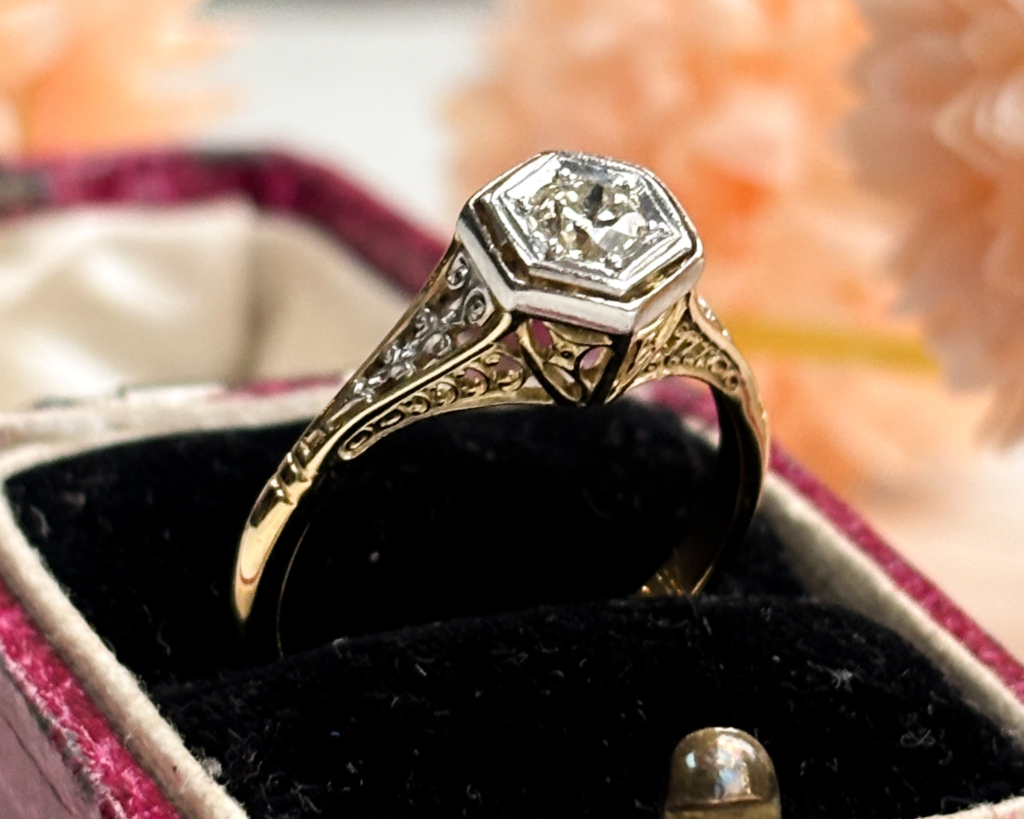
We once had a solitaire that looked Art Deco at first glance because its diamond sat within a geometric setting. Looking more closely, however, the filigree shoulders had the delicacy we associate with Edwardian workmanship.
It also contained an old-cut diamond. That was another detail to consider, although old European cuts continued into the Art Deco period, so an older cut cannot establish the date of a ring on its own.
What interested me was the combination: a more geometric outline alongside fine, intricate shoulders. It showed why a ring doesn’t always fit comfortably into a single stylistic box.
Jewellery archives reveal a similar continuity. Van Cleef & Arpels’ early 1920s designs retained flowers, garlands and references to earlier French decorative styles. Some flowers became simplified geometric patterns, while others remained more naturalistic. Both approaches existed together.
The transition was therefore more subtle than replacing delicate jewellery with bold shapes. Sometimes the change lay in how familiar details were arranged: a firmer outline, a more regular pattern or a stronger contrast between the stones.
For a broader comparison, read our guide to jewellery eras.
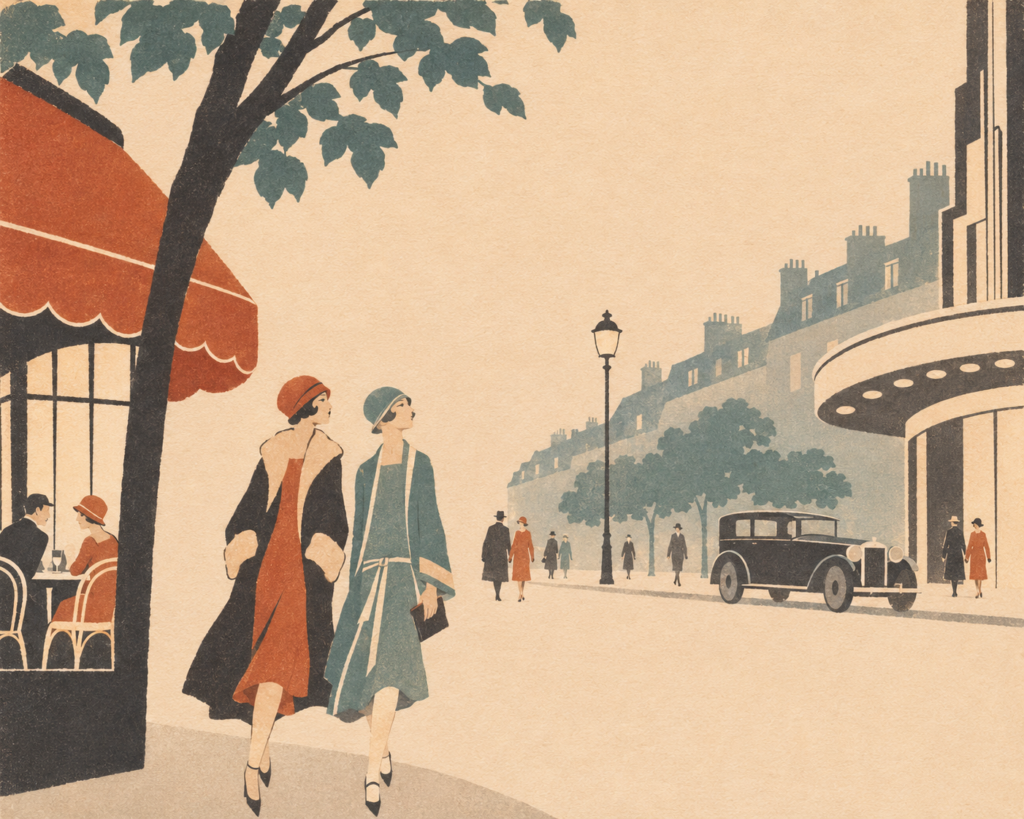
The familiar image of the 1920s is full of movement: dancing, shorter hairstyles, evening dresses and a desire to leave the past behind.
That image captures part of the period, particularly its fashionable, affluent circles. However, it cannot describe everyone’s experience. The interwar years also encompassed loss, economic uncertainty and, later, depression. Jewellery developed within that complicated world, rather than against a background of uninterrupted celebration.
Changes in women’s lives and clothing helped shape what was worn. Sport, transport and greater freedom of movement influenced fashionable silhouettes and accessories. Jewellery responded to these developments, becoming part of a broader conversation about modern life.
Its appeal also extended beyond jewellery. Related ideas appeared in buildings, interiors, textiles and everyday objects. Luxury materials and traditional craftsmanship could sit alongside forms inspired by machinery and mass production. That mixture of old skills and new ambitions is central to understanding Art Deco.
For me, this is where the architectural quality becomes especially interesting. A ring might be small enough to sit on one finger, yet its arrangement of lines, surfaces and spaces can suggest something much larger.
Art Deco developed partly as a reaction to Art Nouveau, which favoured flowing lines, flowers and forms inspired by nature. Designers began exploring straighter lines, repeated patterns and more geometric shapes.
Art Deco drew on several sources rather than following a single formula.
The Ballets Russes, a ballet company whose spectacular productions captivated Paris, helped popularise rich colours and striking patterns. Modern art offered new ways of simplifying and rearranging familiar forms.
Jewellers also took inspiration from the art and jewellery of Egypt, India and China, adapting their colours, patterns and motifs into new designs.
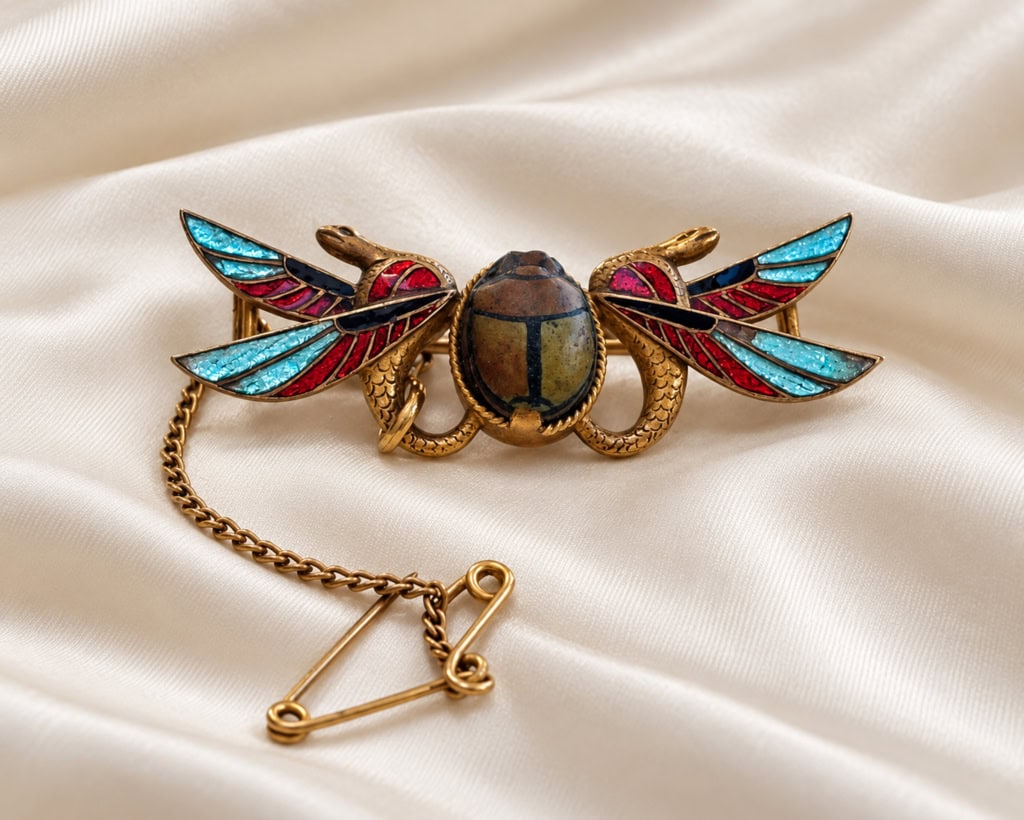
Egyptian Revival jewellery was already popular before the discovery of Tutankhamun’s tomb in 1922. However, the discovery brought fresh excitement, encouraging more designs featuring scarabs, lotus flowers and other Egyptian motifs.
Industrial life supplied another source of ideas. Cars, machinery and the experience of the modern city informed designers such as Raymond Templier.
These influences could produce very different results. One jewel might emphasise vivid colour and ornament, while another depended on a restrained arrangement of diamonds and white metal.
The early 1920s contained a mixture of old and new.
Fine platinum work and decorative detail continued, while designers explored more regular outlines and arrangements. Floral motifs could become increasingly stylised without disappearing altogether.
A useful example survives in Van Cleef & Arpels’ archive: its rose designs appeared in jewellery during the decade, including pieces shown at the major Paris decorative arts exhibition of 1925.
That exhibition helped establish the international prominence of the style. Its full name, the Exposition internationale des arts décoratifs et industriels modernes, later supplied the name we now use: Art Deco.
It is therefore misleading to imagine that everything made in the 1920s was severe or angular. Decorative luxury and more restrained geometry existed together.
This variety is worth remembering when looking at rings. Fine workmanship and delicate proportions do not automatically place a piece outside the Art Deco period.
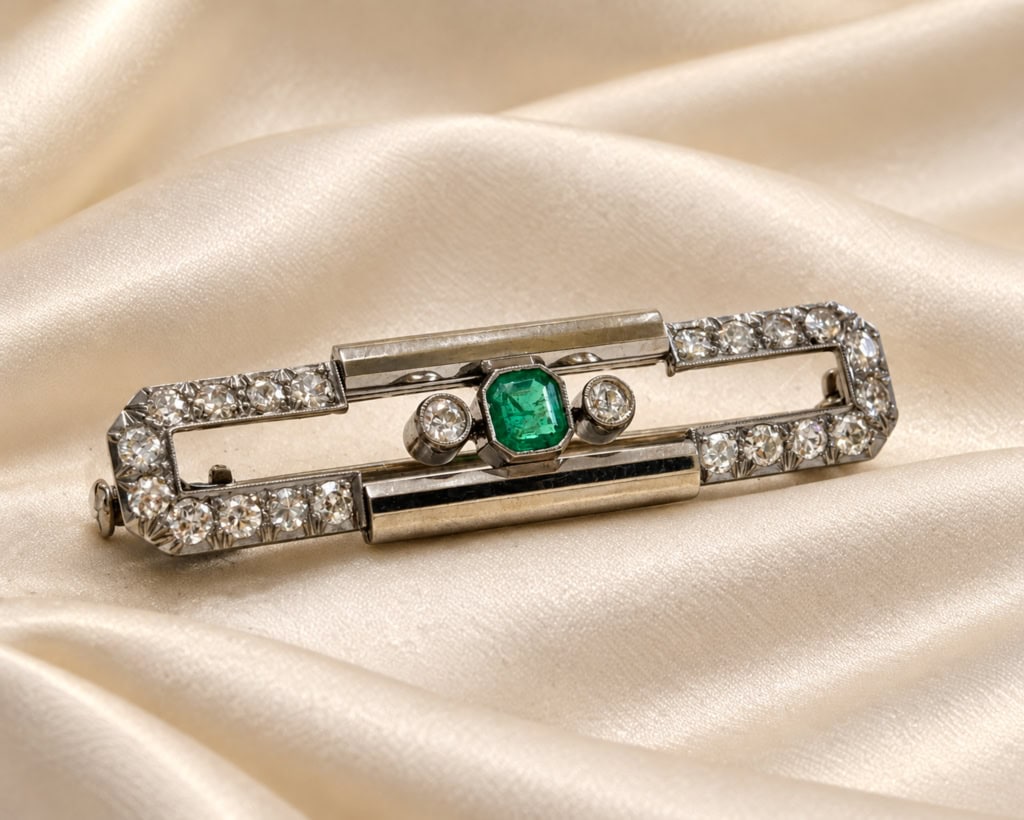
By the late 1920s and into the 1930s, some jewellery became simpler in appearance, with clearer outlines and less decorative detail. Diamonds and platinum created the crisp, all-white look we often associate with Art Deco.
Geometric settings could make a strong impression without coloured stones. Stepped shoulders and carefully arranged diamonds drew attention to the shape of the piece.
Fashion was changing too. Long, flowing evening gowns and Hollywood glamour helped shape the look of the decade.
Yellow gold also became more fashionable from around 1933, partly because it was less expensive than platinum. However, platinum and diamond jewellery remained popular.
These changes happened gradually. Delicate and bold designs existed in both decades, so a ring’s appearance alone cannot tell us whether it was made in the 1920s or 1930s.
Art Deco offered a fresh look at a time when fashion and daily life were changing. Its shapes and patterns appeared everywhere, from buildings and cinemas to clothes and jewellery.
It also suited different tastes. Some people preferred colourful gemstones and bold designs. Others chose diamonds and platinum arranged in simple, balanced settings.
Although the designs looked modern, jewellers still used traditional skills to make them. Creating a precise pattern of closely fitted stones could require a great deal of careful work.
The style reached beyond expensive jewellery. Designers adapted Art Deco patterns for more affordable accessories and household objects, helping more people bring the look into their lives.
The spectacular jewels we see in museums usually belonged to wealthy customers. They show one side of the period, but Art Deco’s wider appeal came from how easily its ideas could work across different materials and budgets.
In the shop, some customers know exactly what they like about Art Deco. They look for symmetry, geometric settings and contrasting colour.
Others have heard of the era without knowing much about its history. They respond to an individual ring first.
I understand both reactions. For me, the appeal is closely connected to proportion and structure. I like the way a clear outline can bring several different stones into a coherent design.
Colour adds another dimension. A contrast between diamonds and coloured gemstones can make the arrangement easier to appreciate, drawing attention to the shape of the setting.
Customers also describe the designs as timeless. That is a personal response rather than a historical fact, but it helps explain why these pieces continue to find new owners.
Many features still feel familiar because modern jewellery continues to use related design ideas. An original period piece can therefore feel distinctive without being difficult to wear.
Learning its history adds something further. The ring becomes a connection with the changing tastes, skills and ambitions of the people who made and wore it.
What interests me most is how much variety sits within the name Art Deco.
There are delicate pieces with traces of earlier design, colourful jewels with elaborate patterns, and restrained settings built around a few strong lines.
Looking closely reveals those differences. It also makes the overlap between periods more interesting than a simple list of identifying features.
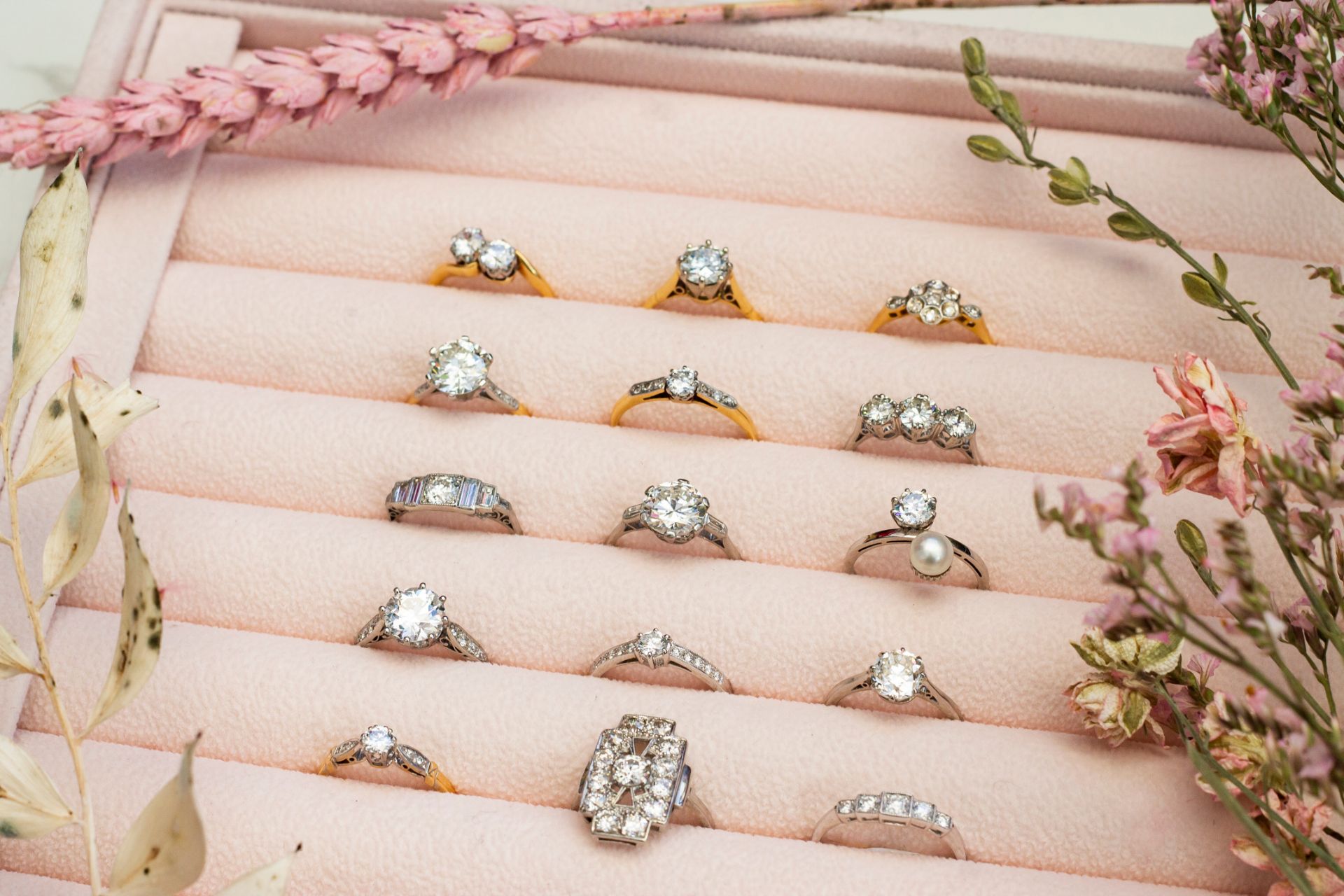
You can explore examples in our Art Deco Rings collection, or visit us in Queens Arcade, Leeds, to see the details in person.
The historical sections draw on the following sources. The shop examples and personal observations come from our own experience.


Jessica Spencer is part of the third generation at Aladdin's Cave Jewellery in Leeds. Her guides are based on the real antique jewellery handled in the shop and decades of family experience.

Antique jewellery tells the story of an era, not just through its materials and design, but through the values, culture,... read more

Choosing an engagement ring is a very personal decision. After all, it's a piece of jewellery that someone will hopefully... read more
This guide to antique pocket watches explores their value, history, and collectability—ideal for those wondering whether an old family timepiece... read more
At a recent auction, I found myself being outbid more times than I could count. Victorian rings, old-cut diamonds and... read more
Enamel jewellery is one of those areas we are always drawn to. The colour catches your eye first, but once... read more
If you've ever picked up an old ring, brooch or pendant and wondered, "How old is this?", you're not alone.... read more
Sign Up To Our Newsletter For 10% OFF Your First Purchase